

ChatGPT
OpenAI
OpenAI started in 2015 as a nonprofit research lab dedicated to ensuring artificial general intelligence benefits all of humanity. Read more →
Latest ChatGPT updates
1,099 published updates
Transfer of adversarial robustness between perturbation types
MuseNet
We’ve created MuseNet, a deep neural network that can generate 4-minute musical compositions with 10 different instruments, and can combine styles from country to Mozart to the Beatles. MuseNet was not explicitly programmed with our understanding of music, but instead discovered patterns of harmony, rhythm, and style by learning to predict the next token in hundreds of thousands of MIDI files. MuseNet uses the same general-purpose unsupervised technology as GPT-2, a large-scale transformer model trained to predict the next token in a sequence, whether audio or text.
Generative modeling with sparse transformers
We’ve developed the Sparse Transformer, a deep neural network which sets new records at predicting what comes next in a sequence—whether text, images, or sound. It uses an algorithmic improvement of the attention mechanism to extract patterns from sequences 30x longer than possible previously.
OpenAI Five defeats Dota 2 world champions
OpenAI Five is the first AI to beat the world champions in an esports game, having won two back-to-back games versus the world champion Dota 2 team, OG, at Finals this weekend. Both OpenAI Five and DeepMind’s AlphaStar had previously beaten good pros privately but lost their live pro matches, making this also the first time an AI has beaten esports pros on livestream.
OpenAI Five Finals
We’ll be holding our final live event for OpenAI Five at 11:30am PT on April 13.
Implicit generation and generalization methods for energy-based models
We’ve made progress towards stable and scalable training of energy-based models (EBMs) resulting in better sample quality and generalization ability than existing models. Generation in EBMs spends more compute to continually refine its answers and doing so can generate samples competitive with GANs at low temperatures, while also having mode coverage guarantees of likelihood-based models. We hope these findings stimulate further research into this promising class of models.
Latest ChatGPT videos
737 published videos
 YouTube
Previewing Ultrafast mode: GPT‑5.6 Sol at up to 14X the speed
Today we’re previewing Ultrafast mode, a new service tier in the OpenAI API for GPT‑5.6 Sol. Powered by Cerebras, Ultrafast runs up to 14x faster than Standard processing and generates up to 750 output tokens per second. OpenAI technical s...
 YouTube
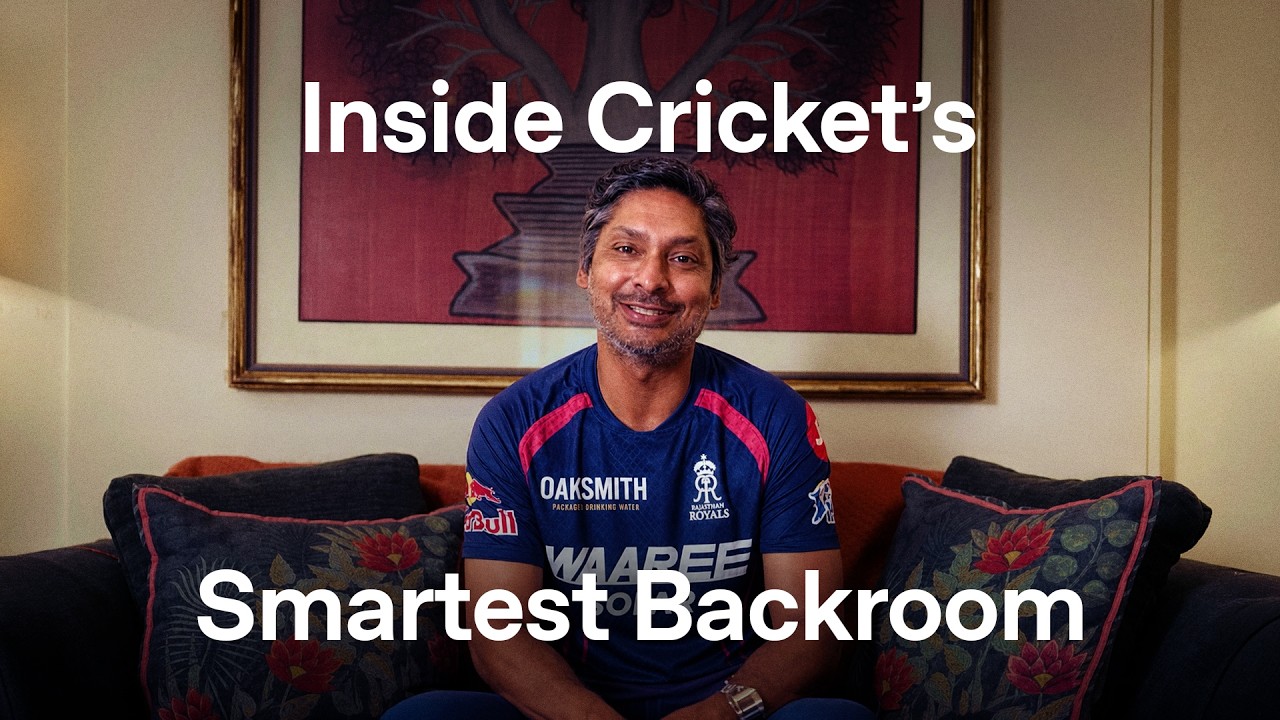
Inside Cricket’s Smartest Backroom | Rajasthan Royals | ChatGPT @rajasthanroyals
What gives one of cricket’s smartest teams its edge before the first ball is bowled? Go behind the scenes with Rajasthan Royals as Kumar Sangakkara and the franchise’s analytics and technology teams reveal how ChatGPT and OpenAI tools supp...
 YouTube
Computer History in ChatGPT
Codex & ChatGPT can now understand the context around what you’re working on. When you opt in to Computer History, it can help you pick up where you left off, get back to unfinished projects, and see suggested skills or scheduled tasks bas...
 YouTube
Previewing Ultrafast mode: GPT‑5.6 Sol at up to 14X the speed
“There’s an old adage that performance can be a feature because when something becomes fast enough, it changes behavior.” Today we’re previewing Ultrafast mode, a new service tier in the OpenAI API for GPT‑5.6 Sol. Powered by Cerebras, Ult...
 YouTube
Get a daily CFO briefing with ChatGPT Work
Start the day with a clear view of the decisions that matter most. ChatGPT Work brings financial performance, close status, contract risks, and market signals into one CFO briefing. See what changed, identify emerging opportunities, and pr...
 YouTube
Build custom financial forecasting apps with ChatGPT Work
Build an interactive financial forecast using the numbers your business already trusts. ChatGPT Work connects approved financial data from Google Drive and NetSuite, compares actuals with the latest outlook, and creates an interactive fore...
OpenAI started in 2015 as a nonprofit research lab dedicated to ensuring artificial general intelligence benefits all of humanity. In November 2022, ChatGPT changed the public's perception of AI overnight — reaching one million users in five days and accelerating the entire industry by years. Today, OpenAI operates across consumer products, enterprise tools, and a developer API that powers thousands of applications worldwide, making it the most recognized name in modern AI.
Timeline
Founded as a nonprofit AI research lab in San Francisco.
GPT-1 released; first transformer-based language model.
GPT-3 launched, opening the API to developers.
ChatGPT released — reaches 1 million users in 5 days.
GPT-4 released; plugins and multimodal capabilities added.
GPT-4o and o1 reasoning models launched; Sora video model unveiled.
o3 and o4-mini released; GPT-4.5 and GPT-5 roadmap confirmed.